
Conduct songs in simple duple, triple and quadruple time

UNDERSTANDING AND APPLICATION OF SCALE AND NOTE DURATIONAL VALUE
One of the creative arts you will love to learn is music. When you sing, you
feel some movement patterns in you. In music performance, there is usually the need for uniformity. There is the one who should make sure to unify performers, set the tempo, execute clear preparations and beats, listen critically and shape the sound of the performers, and to control the interpretation and pacing of the music. That person is called a conductor. You can also be that person.
In this lesson, we will introduce you to some techniques that will enable you to conduct a musical performance. in simple
By the end of the chapter, you will be able to do simple conducting time beats.
LESSON 1: SIMPLE TIME BEAT PATTERNS AND CONDUCTING
Time Signature
In term one, we talked about the time signature. Do you remember what we said about it? There are two numbers normally placed one on top of the other in the staff after the clef to indicate the time at which the music can move. This is known as time signature.
The arrangements of musical sounds and silences are done within a beat pattern called time. If the beat of a particular music can be fundamentally divided into two parts or halves, then it is said to be in simple time. This is determined by the time signature. The top number indicates the number of beats per bar, and the lower number indicates the beat unit that will receive one beat. Look at the arrow in the example below and observe critically how the time signature is placed on the staff.
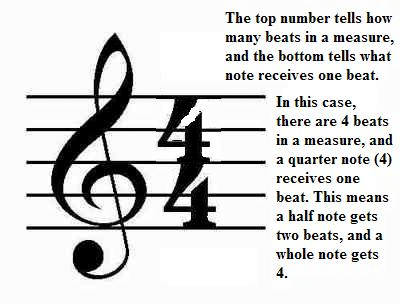
The time signature in the example above can be written using the symbol ‘C’, which refers to “common time”, as illustrated on the next page.

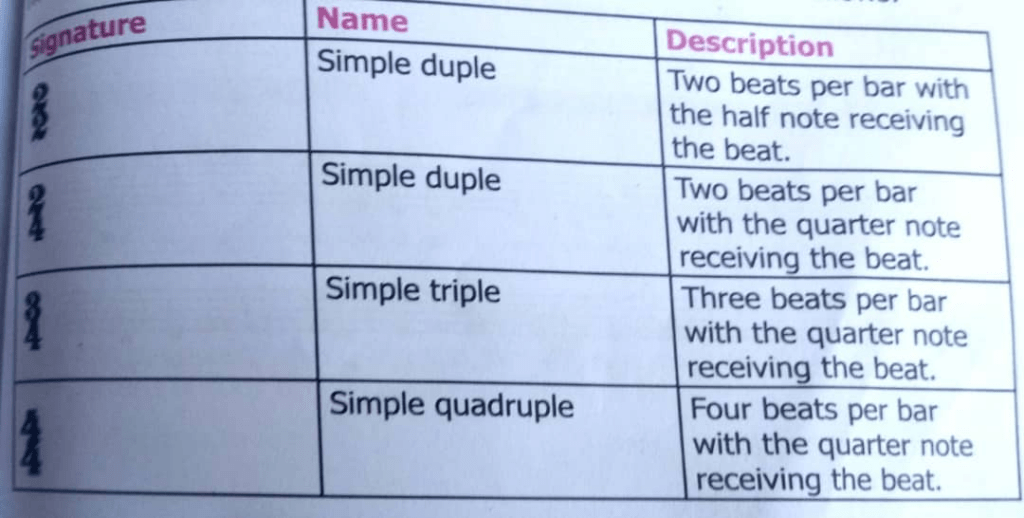
Simple time is indicated by different time signatures. The following are the ommon examples.
(ii)
(iii)
(iv)
In the above examples;
the first time signature, (i), indicates that there are four beats per bar with the crotchet receiving the beat. It is usually identified as simple quadruple. -the second time signature, (ii), indicates three beats in a bar, with the crotchet receiving the beat. It is also identified as simple triple. -the third time signature, (iii), indicates that there are two beats per bar, with the crotchet receiving the beat. This is also identified as simple duple. – the fourth time signature, (iv) also indicates that there are two beats per bar, with the minim receiving the beat. This is also known as simple duple.
In fact, these four time signatures are the most common simple times used in music.
The four most commonly used simple times are displayed as follows:
In the following example of simple quadruple time, patterns of semibreve, minim and crotchet notes have been written with each bar separated by a bar line. The beats are indicated with arrows.
Example 1: Now The Day Is Over
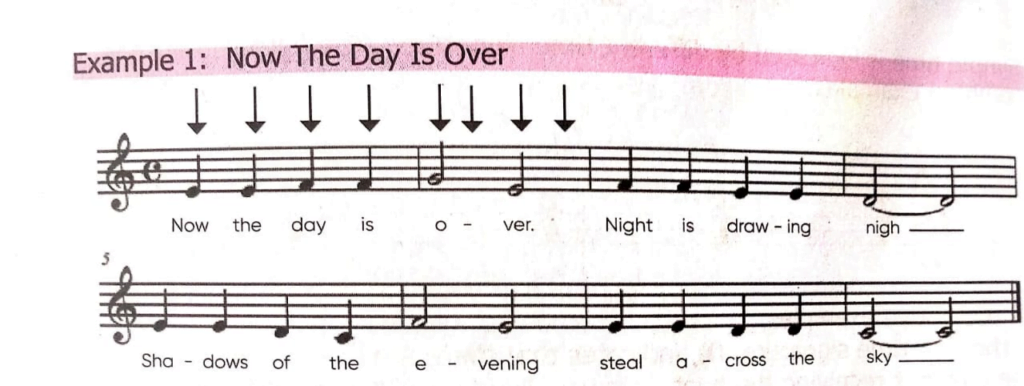
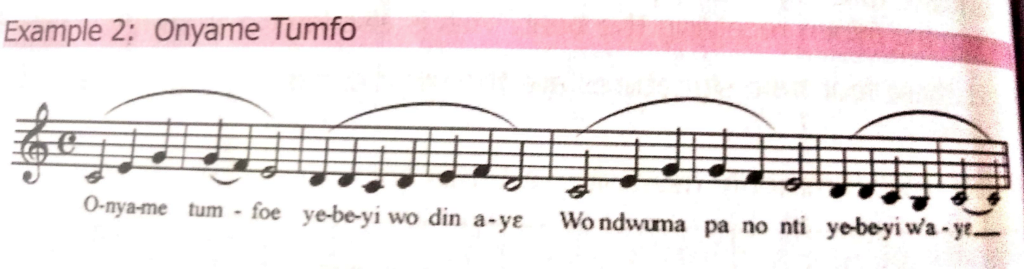
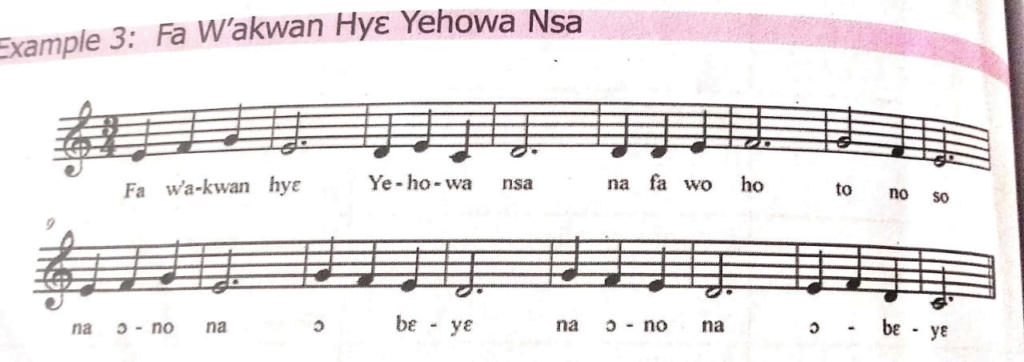
The crotchet note therefore represents a beat in this instance. Similar example applies to the popular Ghanaian pieces, ‘Onyame Tumfo’ and ‘Fa W’akwan Hyɛ Yehowa Nsa’.
Example 2: Onyame Tumfo
Example 3: Fa W’akwan Hye Yehowa Nsa
Notes Grouping in simple Quadruple
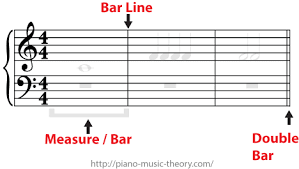
In the examples given, there is an establishment of a clearly defined pattern of four beats. Before we continue with the concept of time, it is prudent to learn a little about rests in music to enable us to combine rests with the note values within the span of time.
Silences in Music – Rests
You have learnt that music does not consist only of sounds but silences too. We have so far learnt about notations that represent the sounds. Let us now look at notations that represent silences. There are therefore notations that show how long each silence lasts just as we have the note values which show how long each sound lasts. The signs used to represent these silences are called rests. Apparently, each of the note values already discussed has its corresponding rest notation. A silence lasting as long as a crotchet is indicated by a crotchet rest while a silence which lasts as long as a quaver is represented by a quaver rest. Study the following examples of note values and their corresponding rest symbols in the staff:
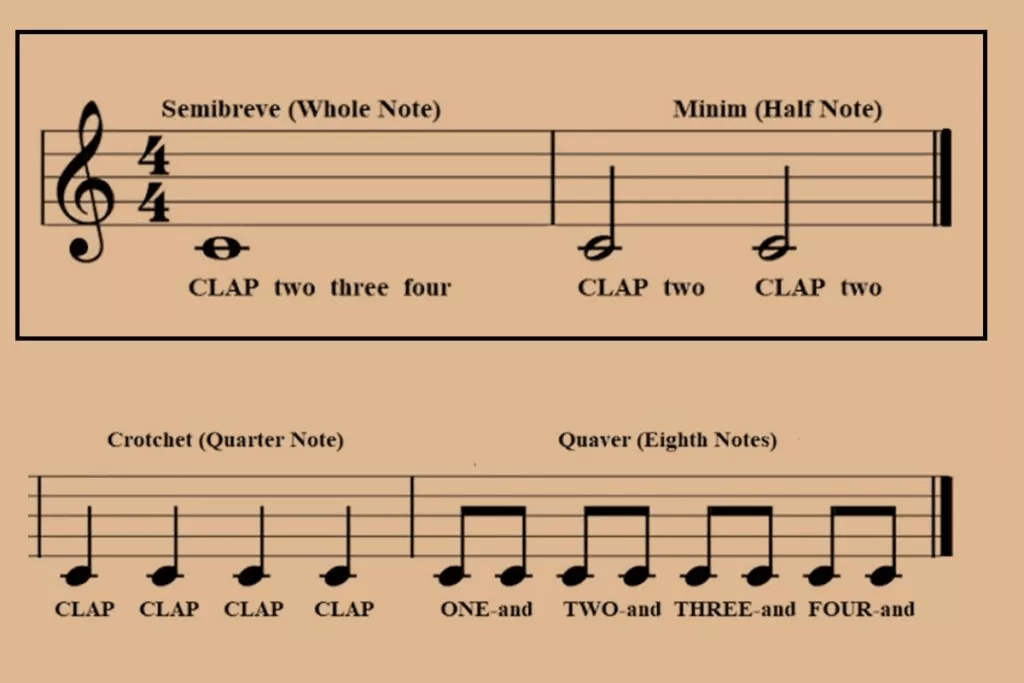
Now that you know about rests, about rests, let’s study an example semibreve rest has been combined with the semibreve note in four counts of time. The pattern of four beats is evidenced in this example.
STRAND 2: CREATIVE ARTS/SUB-STRAND 2.1: MEDIA AND TECHNIQUES
Use the syllable ‘la’ to sing the note value as you mentally count to four, then, rest for four counts.

As you perform this piece, you need to count the beats in quadruple time as ONE, two, three, four as you tap your foot and placing the accent on the first beat. This will help you to have a feel of the grouping of four beats. The counting of the numbers along with the tapping of foot, will help you establish a four-beat pattern. If the counting of the numbers along with the tapping of the foot is three, as in ONE, two, three, then it is a triple time. When the counts are two as in ONE, two, it is a duple time. Therefore simple time may be duple, triple and quadruple.
Conducting in Simple Time
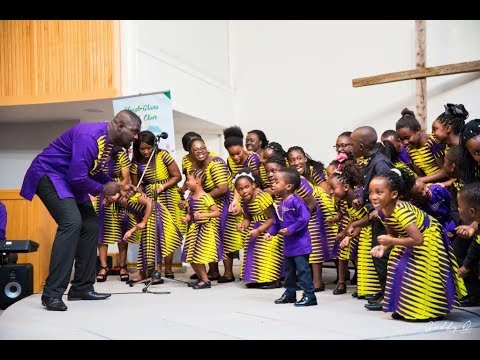
With the idea in simple time patterns, we can now do some conducting. Look at the pictures below. Describe their actions. What are they doing? The images show some form of conducting. Conductors lead and direct groups of singers or the orchestra.
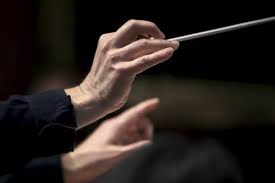

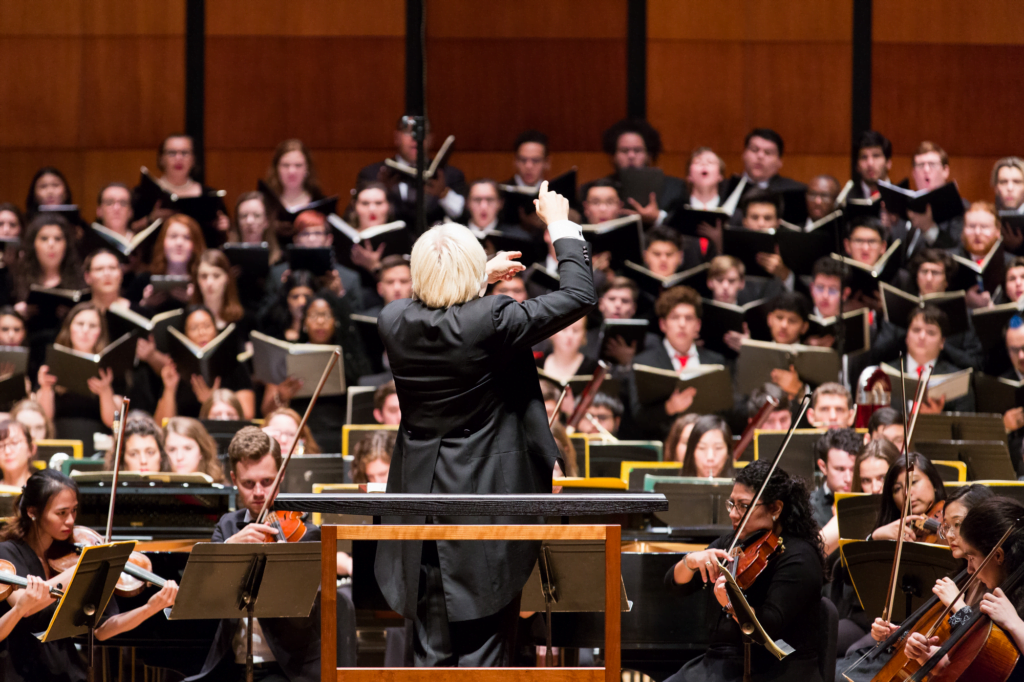
A conductor is a person who directs an orchestra, a choir or other musical group in the performance. He is like a driver who interprets the music and ensures that it is well performed. At the basic level, a conductor must stress the beat to establish tempo for the choir and all other performers to be together. When the choir or the orchestra is large, the baton is used so that the entire group can clearly see the movements.
Conducting Patterns
When conducting, you keep the time of the music in mind and follow the beat pattern. Check whether the time of the music is simple duple, simple triple or simple quadruple.
Study the following patterns in simple duple, simple triple and simple Quadruple times:
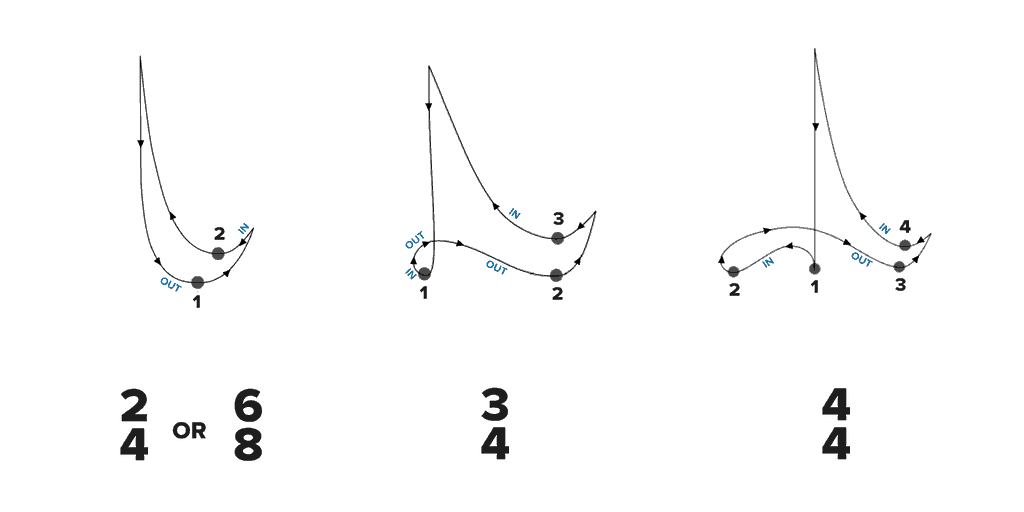
The beat patterns should help you to conduct effectively. In simple duple time, we have the down-beat and the up-beat. The down beat is stressed since it is stronger than the up-beat. In simple triple time and simple quadruple times, the beat that is given emphasis should stand out from the other beats.
Conducting a choir
Activity
Let students sing in groups while they take turns to conduct their group as they perform.
1. (i) What is conducting?
(ii) State three simple time patterns in conducting.